The Guard Isn't the Problem. The Guesswork Is.
Most entry failures are not a guard falling asleep. They are a guard doing exactly what the system asks: recognise a face, trust a sticker, wave a familiar car through. Here is what changes when verification stops depending on memory.
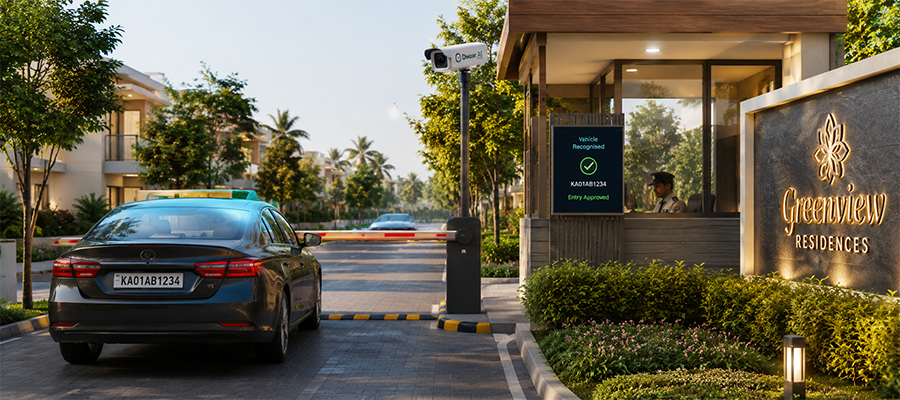
A mid sized gate in Bengaluru sees somewhere between 300 and 500 vehicle and visitor decisions across a single 12 hour shift. Every one of those decisions gets made in the time it takes to glance at a windshield and decide whether the face behind the wheel looks right. That is the actual job we ask a security guard to do, hundreds of times a day, without a single tool that checks their memory against a record.
Quick summary
- Manual gate verification depends on a guard remembering a face or a sticker correctly, every time, for every vehicle.
- A single compound can generate over 1,000 entry decisions a day once all three shifts are counted.
- Dwaar AI runs three independent checks, FASTag or ANPR, face recognition and a resident registry cross check, turning each decision into a logged, repeatable match.
- Communities on the network run at 99.99% platform uptime with a searchable log, so nothing depends on someone remembering correctly at 11pm.
The three seconds nobody accounts for
Watch a gate for an hour and the pattern is obvious. A car slows down, the guard glances at the windshield, and a decision gets made in about three seconds: sticker looks right, face looks familiar, barrier lifts. Multiply that by a weekday evening rush of forty or fifty cars in under an hour and the guard is not verifying anymore. He is pattern matching against tired memory, and pattern matching is exactly where humans start taking shortcuts.
Add a shift change and it gets worse, not better. The new guard on duty has none of the context the previous one built up over eight hours. He is starting from zero, with the same three seconds and less information than the person he replaced.
This isn't a training problem
Committees often respond to entry failures by asking for better training or a stricter guard. That misreads the problem. A guard who correctly identifies 495 out of 500 vehicles in a shift is performing well by any human standard. The five he gets wrong are not a discipline issue. They are what happens when you ask memory to do a machine's job at scale.
What guesswork actually means at a gate
Ask any committee what a security check should confirm and the list is longer than three seconds allows for:
- That the vehicle registration matches a resident or a pre approved visitor.
- That the person behind the wheel is who they say they are.
- That a repeat visitor from three weeks ago is still authorised today.
- That a delivery rider isn't reusing someone else's gate pass.
- That the record of that entry is accurate enough to check later, if it ever needs to be.
A guard doing this from memory is not being careless. He is being asked to run four or five separate checks in the time it takes to say welcome home, with no record to fall back on if he gets one wrong.
Why memory does not scale
This is where guesswork actually breaks. Across the Dwaar AI network, communities range from a single block of sixty apartments to compounds pushing past 800 units. The math does not change with size, it just repeats more often. A 60 unit block might see 150 entries a day. An 800 unit compound multiplies that many times over, spread across three shifts and however many guards a committee can afford to roster.
No guard, however good, holds a thousand faces and number plates in working memory for an eight hour shift, let alone across a handover to someone who was not there for the last one. The failures that follow, a tailgating car, an unregistered visitor waved through, a name misremembered in the register, are not a people problem. They are what guesswork looks like once it is run at volume.
"Before this, if a guard said a car looked familiar, that was the whole security check. Now every entry has a name attached to it, and I don't have to take anyone's word for it."
Three checks, one decision
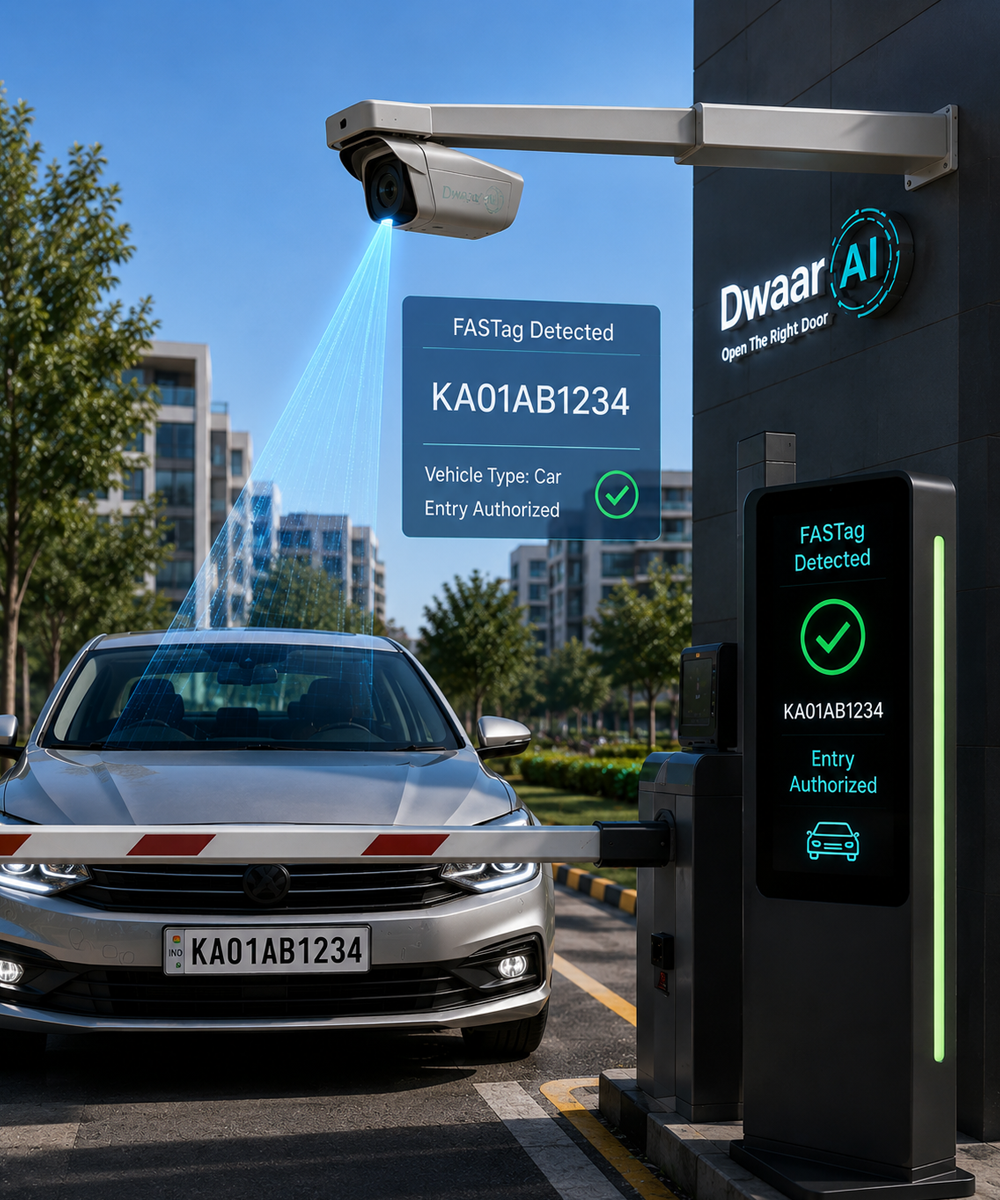
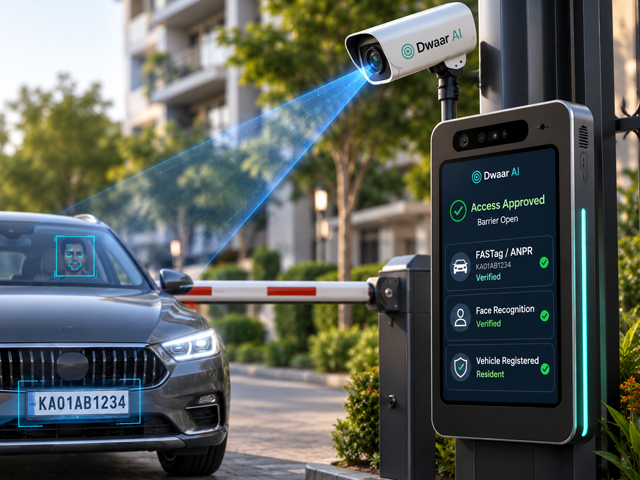
Dwaar AI does not ask a guard to remember anything. Three independent checks run before a barrier lifts, through AI-Powered Gate Management:
- FASTag or ANPR reads the vehicle.
- Face recognition confirms the person behind the wheel.
- A cross check against the resident and visitor registry confirms the match is authorised for that day.
If any one layer cannot resolve a match with confidence, a new car without a registered FASTag, for instance, the next layer steps in automatically. A guard only gets involved when all three layers genuinely cannot agree, and by then the system, run through the Nazar guard app, has already logged what it tried and why.
What changes in the log afterward
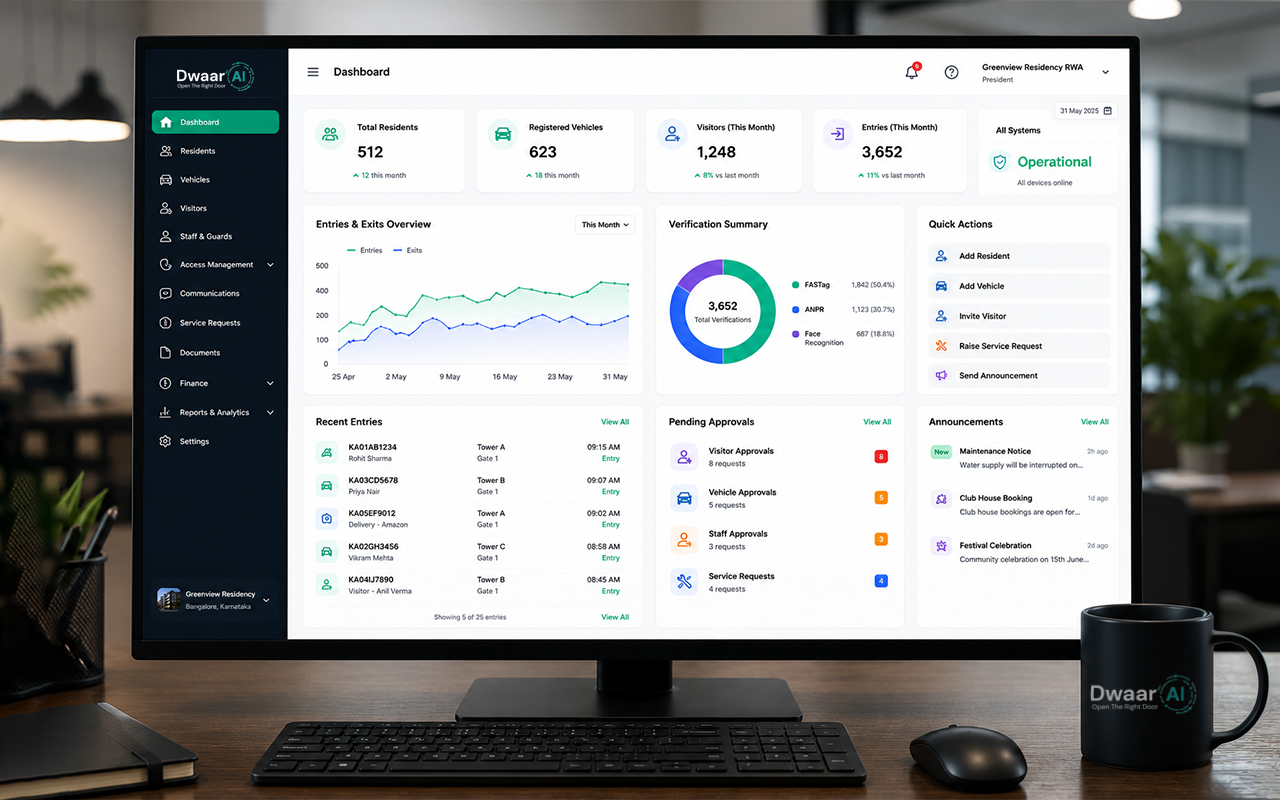
The difference shows up less at the gate and more the next time something goes wrong. Instead of asking a guard to recall a Tuesday evening from two weeks ago, a committee opens a searchable log in the RWA Admin Portal and finds the exact entry: vehicle, face match, timestamp, and which layer resolved it.
Communities on the Dwaar AI network run this at 99.99% platform uptime, so the log is there when it's needed, not just when the system happens to be working. Every one of the 2,400+ gates on the network is generating that same kind of record, all day, every day, whether or not anyone is watching the screen. Residents approve visitors from the Basera app before they arrive, so half the guesswork never reaches the guard in the first place.
See what it looks like at your gate
Twenty minutes, your compound's actual entry volume, no generic pitch.
Book a DemoFrequently asked questions
What does guesswork verification mean at a residential gate?
Guesswork verification is entry decided on a guard's memory and judgement alone, recognising a face, trusting a sticker, or waving through a familiar car, with no independent record confirming the match.
How does Dwaar AI verify residents and visitors at the gate?
Dwaar AI runs three independent checks: FASTag or ANPR for the vehicle, face recognition for the person, and a cross check against the resident registry. If one layer can't confirm a match, the next one steps in automatically before the barrier lifts.
Does automated gate verification slow down entry?
No. The three layer check resolves a match in about two seconds for a recognised vehicle and resident, which is faster than the average manual check and doesn't depend on the guard being alert at that exact moment.
Does Dwaar AI replace the security guard?
No. Dwaar AI supports the guard instead of replacing them. The system handles verification and logging, so the guard is confirming a decision the system already made rather than making the call alone from memory.
What changes in a community's entry log after switching to Dwaar AI?
Every entry becomes a searchable, timestamped record instead of a handwritten line in a register. Committees can review any incident without depending on a guard's memory of that shift, and the platform runs at 99.99% uptime across the Dwaar AI network.